
Dental Assistant Exam Questions and Answers PDF: A Comprehensive Study Plan
Prepare effectively with a comprehensive review, utilizing over 3,000 multiple-choice questions modeled after the CDA exam, alongside detailed answer explanations for optimal success.
I. Understanding the CDA Exam
Navigating the Certified Dental Assistant (CDA) exam requires a strategic approach, and understanding its structure is paramount. The exam, administered by the Dental Assisting National Board (DANB), assesses competency across various dental assisting domains. Resources like Trivium Test Prep’s review guide offer a focused, yet comprehensive, preparation path.
Effective study involves utilizing practice questions – over 3,000 are available through resources like Evolve – mirroring the CDA’s multiple-choice format. These questions, complete with rationales, help identify knowledge gaps. The Child Dental Benefits Schedule (CDBS) also plays a role, as understanding dental benefits is crucial. Preparation should align with the Australian Dental Association’s standards, ensuring a thorough grasp of the material. Success hinges on dedicated practice and a clear understanding of exam expectations.
Maximize your preparation with focused study guides, practice tests featuring 3,000+ questions, and detailed explanations to confidently tackle the CDA exam.
The Certified Dental Assistant (CDA) exam is a crucial step towards a thriving career. Thorough preparation is key, and utilizing comprehensive study resources is paramount to success. Many candidates benefit from dedicated PDF study guides containing a wealth of practice questions.
These resources often mirror the format and content of the actual CDA examination, offering invaluable experience. Specifically, look for materials boasting over 3,000 multiple-choice questions, complete with detailed rationales explaining both correct and incorrect answers. This approach facilitates a deeper understanding of the underlying concepts.
Understanding the exam’s structure and content outline, as well as leveraging practice tests, will significantly boost your confidence and improve your chances of achieving a passing score. Remember to focus on areas where you identify weaknesses through test analysis.
II. Exam Content Outline
The CDA exam comprehensively assesses a dental assistant’s knowledge across several core areas. Preparation materials, including PDF study guides, should align with this structure. Key content includes core dental sciences – anatomy, physiology, pathology, and dental materials.
Clinical procedures, such as chairside assisting, infection control, and sterilization techniques, are heavily emphasized. Radiography and imaging principles, including interpretation and radiation safety, also form a significant portion of the exam.
Furthermore, a strong understanding of dental practice management – patient records, scheduling, and billing (CDBS) – is essential. Finally, knowledge of pharmacology, emergency procedures, and basic life support (BLS) is critical. Effective study resources will cover all these domains with ample practice questions.
III. Utilizing PDF Study Guides
PDF study guides offer a flexible and accessible method for exam preparation. Look for resources containing a substantial number of multiple-choice questions, mirroring the CDA exam format. These guides should provide detailed rationales for both correct and incorrect answers, fostering deeper understanding.
Prioritize materials that cover the complete exam content outline – dental sciences, clinical procedures, radiography, practice management, and emergency protocols. Supplement PDF study with practice tests, ideally including full-length simulations.
Evolve resources offer over 3,000 questions, enhancing your preparation. Regularly analyze practice test results to pinpoint weak areas and focus your study efforts accordingly.

II. Core Dental Sciences
Master essential dental sciences – anatomy, physiology, pathology, and materials – foundational for the CDA exam, ensuring a strong understanding of dental principles.
IV. Anatomy & Terminology
A solid grasp of anatomical structures is paramount for dental assistants, and comprehensive study materials will focus on the oral cavity, teeth, and surrounding tissues. Expect detailed questions on tooth morphology, including enamel, dentin, and pulp, as well as the identification of various anatomical landmarks.
Mastering dental terminology is equally crucial; understanding prefixes, suffixes, and root words will unlock the meaning of complex medical terms encountered in patient charts and during procedures. Practice quizzes and flashcards are invaluable tools for memorizing these terms.
Effective study resources will include labeled diagrams, interactive exercises, and practice questions designed to reinforce your knowledge of both anatomy and terminology, preparing you for the CDA exam’s challenges.
V. Physiology & Pathology
Understanding normal physiological processes within the oral cavity is fundamental. Study materials should cover salivary gland function, temporomandibular joint (TMJ) mechanics, and the process of mastication. Expect questions assessing your knowledge of how these systems operate in a healthy state.
Pathology focuses on disease processes. Prepare to identify common oral pathologies like caries, gingivitis, periodontitis, and oral cancer. Questions will likely involve recognizing signs, symptoms, and potential complications.
Comprehensive resources will present case studies and clinical scenarios, allowing you to apply your knowledge of physiology and pathology to real-world situations, ultimately boosting your confidence on the CDA exam.
VI. Dental Materials
Mastering dental materials is crucial. Study guides should detail the composition, properties, and uses of various materials – amalgams, composites, ceramics, and impression materials are key. Understand their strengths, weaknesses, and appropriate applications in different clinical scenarios.
Expect questions on material manipulation, including mixing ratios, setting times, and potential adverse reactions. Knowledge of biocompatibility and infection control related to materials is also vital.
Effective preparation involves recognizing material failures and understanding how to properly handle and dispose of dental materials, ensuring patient safety and procedural success on the CDA examination.
III. Clinical Procedures
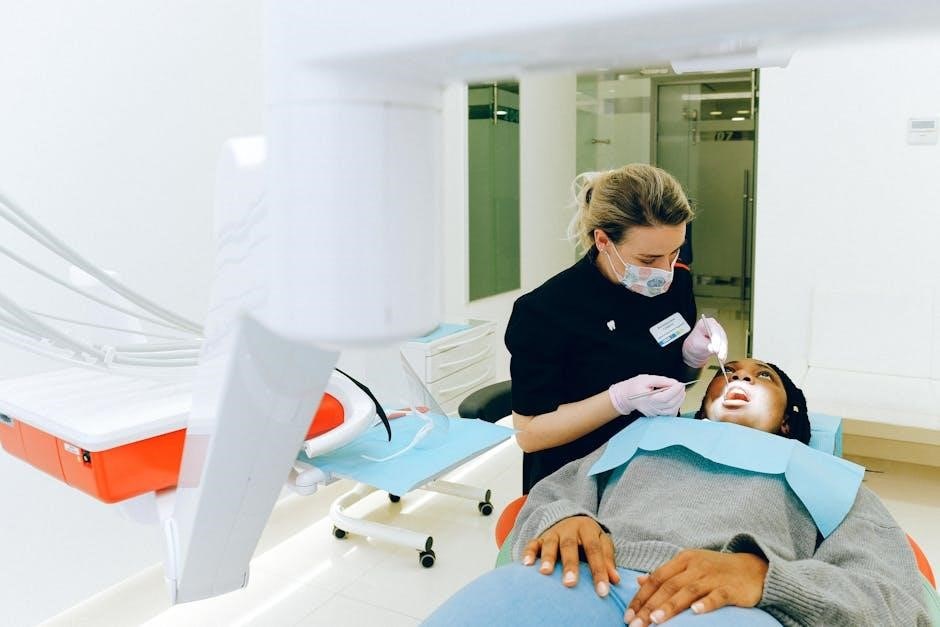
Focus on chairside assisting, infection control, and sterilization techniques, as these are heavily emphasized on the CDA exam, ensuring procedural proficiency.
VII. Chairside Assisting
Mastering chairside assisting is crucial for the CDA exam, demanding a thorough understanding of dental procedures and assisting techniques. Expect questions covering instrument transfer, suctioning, retraction, and preparing materials.
Effective communication with the dentist and patient is paramount, alongside maintaining a sterile field. Practice questions will assess your knowledge of four-handed dentistry principles and anticipating the dentist’s needs.
Review proper patient positioning, understanding dental charting, and accurately recording treatment information. Preparation is key; utilize practice tests with 3,000+ questions to solidify your skills and confidently navigate the clinical aspects of the CDA examination.
VIII. Infection Control Protocols
Infection control is paramount in dentistry, and the CDA exam heavily emphasizes this area. Expect detailed questions on sterilization techniques, disinfection procedures, and barrier methods.
Understand the principles of asepsis, proper handling of contaminated instruments, and the use of personal protective equipment (PPE). Questions will assess your knowledge of OSHA guidelines and CDC recommendations.
Familiarize yourself with different types of sterilization – autoclave, chemical sterilization – and their monitoring procedures. Comprehensive study is vital; utilize practice questions, potentially from resources offering 3,000+ questions, to ensure you’re prepared to demonstrate a strong grasp of infection control protocols.
IX. Sterilization Techniques
Mastering sterilization is crucial for CDA exam success. Expect questions detailing autoclave operation, biological and chemical indicator monitoring, and proper instrument packaging.
Understand the differences between sterilization, disinfection, and sanitation, and when each is appropriate. The exam will test your knowledge of spore testing and the importance of maintaining accurate sterilization records.
Resources with extensive practice questions – like those offering over 3,000 – can help solidify your understanding. Thorough preparation is key; focus on the principles of steam sterilization and the proper procedures for handling contaminated instruments to confidently answer exam questions.
IV. Radiography & Imaging
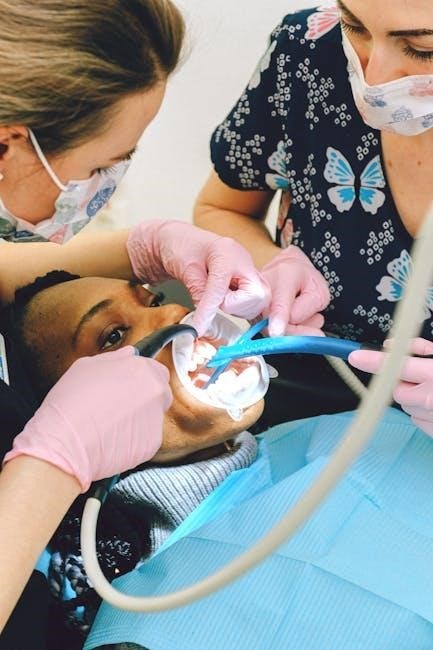
Ace the radiography section by studying principles, image interpretation, and radiation safety protocols, utilizing practice questions for comprehensive CDA exam preparation.
X. Dental Radiography Principles
Mastering dental radiography principles is crucial for CDA exam success. This section focuses on understanding the fundamental concepts behind image formation, including X-ray production, beam collimation, and patient positioning.
Key areas of study include the properties of radiation, the inverse square law, and factors influencing image quality – such as kilovoltage peak (kVp), milliamperage (mA), and exposure time.
Furthermore, comprehending different radiographic techniques like bitewing, periapical, and panoramic imaging is essential.
Practice questions will assess your knowledge of these principles, ensuring you can confidently apply them in clinical scenarios and accurately answer exam questions related to radiographic techniques and safety.
XI. Image Interpretation
Developing strong image interpretation skills is vital for a dental assistant. This section focuses on recognizing normal anatomical structures and identifying common pathological conditions visible on dental radiographs.
You’ll learn to differentiate between various types of caries, periodontal disease indicators, and abnormalities of the jawbone. Understanding radiographic density and how different tissues appear on images is key.
Practice questions will present various radiographic images, challenging you to accurately identify features and diagnose potential issues.
This skill is essential for assisting the dentist during diagnosis and treatment planning, and will be thoroughly tested on the CDA exam.
XII. Radiation Safety
Prioritizing patient and operator safety regarding radiation exposure is paramount in dentistry. This section comprehensively covers radiation safety principles and protocols, crucial for the CDA exam.
You’ll delve into ALARA (As Low As Reasonably Achievable) principles, understanding how to minimize exposure through proper technique, shielding, and filtration. Knowledge of federal and state regulations concerning radiation safety is essential.
Practice questions will assess your understanding of radiation units, biological effects of radiation, and the use of personal protective equipment (PPE).
Mastering these concepts ensures responsible radiographic practice and demonstrates competency to the DANB.

V. Dental Practice Management
Efficient practice operations are key! Study patient records, scheduling, billing (CDBS), and coding procedures to excel on the CDA exam and beyond.
XIII. Patient Records Management
Mastering patient records is crucial for the CDA exam and daily practice. Thorough understanding of documentation, including accurate charting, medical and dental histories, and informed consent forms, is essential.
Dental assistants must know how to maintain confidentiality, adhering to HIPAA regulations, and ensure records are easily accessible yet securely stored.
Expect exam questions covering legal requirements for record retention, proper procedures for correcting errors, and the importance of complete and organized documentation.
Practice questions will likely assess your knowledge of electronic health records (EHR) and their impact on patient care and practice efficiency.
Preparation resources, like practice tests, offer valuable exposure to the types of scenarios you’ll encounter on the CDA exam regarding patient record integrity.
XIV. Scheduling & Appointment Procedures
Efficient scheduling is vital for a successful dental practice, and a key component of the CDA exam. Understanding appointment types – recall, new patient, emergency – and their appropriate time allocations is essential.
Expect questions on managing appointment books, prioritizing patient needs, and handling cancellations or rescheduling requests professionally. Knowledge of blocking out time for specific procedures is also important.
The exam will likely assess your understanding of patient communication regarding appointments, including confirmation calls and pre-appointment instructions.
Practice questions will test your ability to optimize scheduling to maximize productivity while minimizing patient wait times.
Review resources often include scenarios requiring you to apply scheduling principles to real-world dental office situations.
XV. Dental Billing & Coding (CDBS)
Mastering dental billing and coding, particularly the Child Dental Benefits Schedule (CDBS), is crucial for the CDA exam. The CDBS, an Australian Government program, provides dental benefits to eligible children.
Expect questions regarding benefit caps, eligible services, and the two-digit prefix used for CDBS dental items, based on the Australian Dental Association Schedule of Dental Services.

Understanding claim submission processes and accurate coding using the appropriate dental codes is essential.
Practice questions will assess your ability to verify patient eligibility and apply CDBS benefits correctly.
Resources emphasize staying updated on CDBS changes and ensuring compliance with program guidelines for accurate billing practices.
VI. Pharmacology & Emergency Procedures
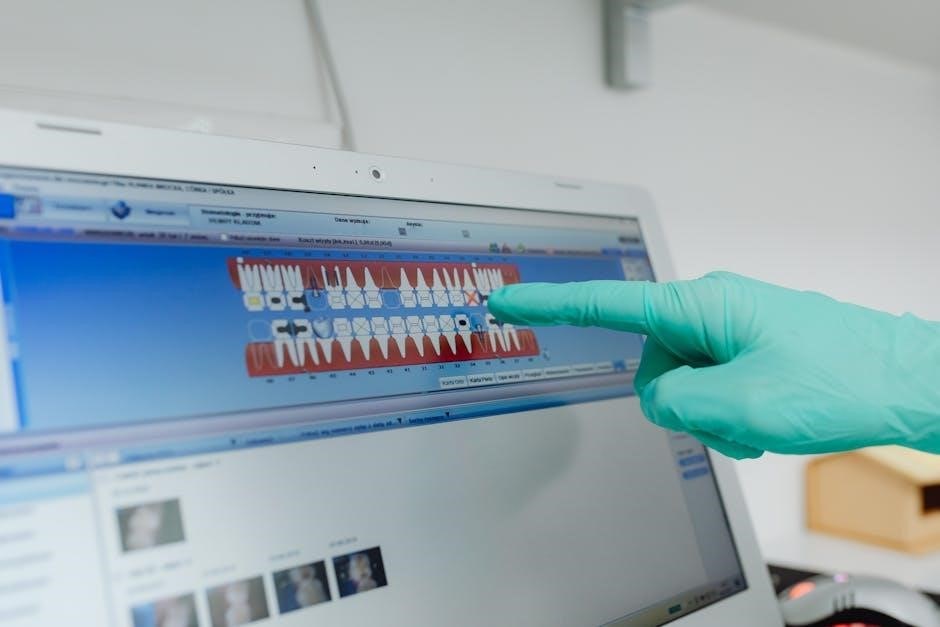
Prepare for questions on common dental medications, managing medical emergencies, and performing Basic Life Support (BLS) within a dental office setting.
XVI. Common Dental Medications

Mastering pharmacology is crucial for the CDA exam. Expect questions covering frequently prescribed dental medications, including analgesics for pain management – like NSAIDs and opioids – and antibiotics used to combat oral infections.
Understand the purpose, dosage forms, and potential adverse effects of local anesthetics, vital for comfortable dental procedures. Be prepared to identify medications used for anxiety reduction, such as nitrous oxide, and their appropriate administration.
Furthermore, familiarize yourself with emergency medications like epinephrine for anaphylaxis and calcium gluconate for hydrofluoric acid exposure. Knowing drug interactions and contraindications is also essential for safe patient care and successful exam performance.
XVII. Medical Emergencies in the Dental Office
Preparedness is key when facing medical emergencies. The CDA exam will assess your knowledge of recognizing and responding to situations like syncope (fainting), allergic reactions – including anaphylaxis – and cardiac events.
Understand the protocols for managing diabetic emergencies, such as hypoglycemia and hyperglycemia, and the appropriate steps to take. Be familiar with seizure management and asthma exacerbations, including oxygen administration.
Knowing how to utilize emergency equipment, like oxygen tanks and AEDs, is vital. Practice scenarios involving choking and airway obstruction will also be tested. Prioritizing patient assessment, activating emergency medical services, and providing basic life support are crucial skills.
XVIII. Basic Life Support (BLS)
Mastering BLS is fundamental for any dental assistant. The CDA exam heavily emphasizes your ability to respond effectively to life-threatening emergencies. This includes performing high-quality CPR – cardiopulmonary resuscitation – for adults, children, and infants, adhering to current guidelines.
You’ll need to demonstrate proficiency in recognizing the signs of cardiac arrest and initiating the appropriate response. Understanding the steps for relieving choking, utilizing an automated external defibrillator (AED), and providing rescue breaths are essential.
Knowledge of the BLS algorithms and the importance of teamwork during a crisis will be assessed. Regular refresher courses are recommended to maintain competency and confidence in these critical skills.

VII. Practice Exams & Question Types
Sharpen your skills with practice tests featuring multiple-choice questions, mirroring the CDA exam format, and analyze results to pinpoint areas needing focused study.
XIX. Multiple-Choice Question Strategies
Mastering multiple-choice questions is crucial for CDA exam success. Begin by carefully reading each question and identifying key terms. Eliminate obviously incorrect answers, narrowing down your choices. Pay attention to wording – qualifiers like “always” or “never” often indicate incorrect options.
Understand the rationale behind correct answers, not just memorizing them. Utilize the process of elimination strategically, even if unsure. Time management is key; don’t spend too long on any single question.
Practice with a variety of questions, like those found in review guides and online resources (Evolve offers 3,000+). Reviewing answer explanations is vital for understanding concepts and improving future performance. Remember, a systematic approach and consistent practice will significantly boost your confidence and score.
XX. Analyzing Practice Test Results
Thorough analysis of practice test results is paramount for targeted study. Don’t just check your score; identify specific areas of weakness. Categorize missed questions by subject matter – anatomy, radiography, or infection control, for example.
Review the rationales for both correct and incorrect answers to deepen understanding. Utilize resources like DANB official materials and Evolve practice questions to reinforce challenging concepts.
Track your progress over multiple practice tests to monitor improvement. Focus your study efforts on consistently problematic areas. A detailed review, coupled with focused practice, will maximize your learning and prepare you for the CDA exam’s challenges.
XXI. Identifying Weak Areas
Pinpointing knowledge gaps is crucial for efficient studying. After analyzing practice tests, create a list of topics where performance consistently lags. Are you struggling with dental materials, pharmacology, or perhaps radiographic interpretation?
Refer back to the exam content outline to ensure comprehensive coverage. Utilize resources like the DANB official materials and the extensive Evolve question bank (3,000+ questions) to target these weak areas.
Don’t hesitate to revisit foundational concepts. Focused study, combined with consistent practice, will transform weaknesses into strengths, ultimately boosting your confidence and exam readiness.

VIII. Resources & Study Materials
Access vital tools like DANB resources, Evolve’s 3,000+ practice questions, and updates on the Child Dental Benefits Schedule (CDBS) for thorough preparation.
XXII. DANB Official Resources
The Dental Assisting National Board (DANB) provides essential resources for exam candidates. Their official website is the primary source for accurate information regarding the Certified Dental Assistant (CDA) examination, including eligibility requirements, exam content outlines, and registration procedures.
Candidates can find practice tests and study materials directly from DANB, designed to mirror the actual exam format and difficulty. These resources are invaluable for familiarizing yourself with the question types and assessing your knowledge gaps. Furthermore, DANB offers detailed information about the exam scoring process and certification maintenance requirements.
Exploring the DANB website ensures you have the most up-to-date information and access to legitimate study aids, maximizing your chances of success on the CDA exam. Utilizing these official resources is a cornerstone of effective exam preparation.
XXIII. Evolve Practice Questions (3,000+)
Evolve offers a substantial bank of over 3,000 multiple-choice practice questions specifically designed for CDA exam preparation. These questions, accessible alongside the print book, are meticulously modeled after the format and content of the Certified Dental Assistant (CDA) examination.
A key benefit of Evolve’s question bank is the inclusion of detailed answers and rationales for each question. This allows candidates to not only assess their knowledge but also understand the reasoning behind correct and incorrect answers, reinforcing learning.
Consistent practice with these questions builds confidence and familiarity with the exam’s style, ultimately enhancing performance. Evolve’s extensive question pool provides a comprehensive review and identifies areas needing further study.
XXIV. Child Dental Benefits Schedule (CDBS) Updates
The Child Dental Benefits Schedule (CDBS) is an Australian Government initiative providing access to basic dental services for eligible children, capped over a two-calendar-year period. Understanding the CDBS is crucial for dental assistants, as it impacts billing and treatment planning.
The schedule is based on the Australian Dental Association Australian Schedule of Dental Services and Glossary, 13th Edition, utilizing a two-digit prefix for CDBS dental items. Regular updates occur, so staying current is vital.
Dental assistants should be familiar with eligibility criteria and benefit limits. Promoting preventative care – regular check-ups from the appearance of the first tooth or by a child’s first birthday – is also key.